Herd mentality, a pervasive social phenomenon, describes how individuals mimic the actions of larger groups, often disregarding their own judgment. This tendency impacts diverse fields,
from economics—driving bubbles and crashes—to marketing, and even everyday social interactions. Understanding its roots is crucial for navigating modern complexities.
Defining Herd Mentality
Herd mentality, often interchangeably used with “mob mentality,” signifies a psychological bias where individuals within a group adopt behaviors or make decisions mirroring those of the majority, irrespective of their personal beliefs or rational analysis. This isn’t simply agreement; it’s a subconscious drive to align with perceived group norms, often stemming from a desire for social acceptance or a fear of standing out.
The core of this phenomenon lies in the suppression of individual critical thinking. Individuals may consciously or unconsciously downplay their own knowledge or judgment, prioritizing the perceived safety and validation found within the collective. This can manifest in various ways, from following fashion trends to participating in financial speculation, even when evidence suggests otherwise.
Crucially, herd mentality isn’t necessarily a deliberate act of deception. Often, individuals are unaware they are succumbing to this influence. Solomon Asch’s conformity experiments vividly demonstrated this, showing people readily conforming to incorrect group opinions despite clear evidence to the contrary. This highlights the powerful, often unseen, forces driving collective behavior and the challenges in maintaining independent thought within a group setting.
Historical Context of the Term
While the concept of collective behavior has been observed throughout history – from ancient riots to religious fervor – the explicit term “herd mentality” gained traction in the late 19th and early 20th centuries. Early sociological studies began to analyze crowd psychology, attempting to understand the dynamics of large groups and their often irrational actions. Gustave Le Bon’s 1895 work, “The Crowd: A Study of the Popular Mind,” was particularly influential, positing that individuals lose their individuality and reason within a crowd.
However, the formalization of the term and its psychological underpinnings truly emerged with the rise of behavioral psychology in the mid-20th century. Landmark experiments, like those conducted by Solomon Asch in the 1950s, provided empirical evidence for the power of conformity and social influence. These studies demonstrated how readily individuals abandon their own judgment to align with group opinions, even when demonstrably incorrect.
The term’s application broadened significantly with the increasing study of economic bubbles and crashes, where collective irrationality demonstrably drives market trends. This solidified “herd mentality” as a key concept in behavioral finance, explaining phenomena like speculative bubbles and panicked sell-offs.
Relevance in Contemporary Society (as of 04/28/2026)
As of April 28, 2026, herd mentality’s influence is arguably more pronounced than ever, amplified by the pervasive nature of social media and 24/7 news cycles. The rapid dissemination of information – and misinformation – creates echo chambers where conformity is reinforced and dissenting opinions are suppressed. This fuels rapid shifts in public opinion and consumer behavior, impacting everything from political discourse to investment decisions.
The rise of “influencer” culture exemplifies this dynamic, with individuals wielding significant power to shape trends and drive collective action. Furthermore, neuroeconomic research continues to illuminate the neurological basis of herding, demonstrating that observing others’ actions activates similar brain regions as performing those actions ourselves, fostering imitation.
Recent economic volatility, including fluctuations in cryptocurrency markets and meme stock surges, vividly illustrate the dangers of unchecked herd behavior. Understanding these dynamics is crucial for individuals and institutions alike, promoting more rational decision-making and mitigating the risks associated with collective irrationality in an increasingly interconnected world.

Psychological Foundations of Herding
Psychological underpinnings of herding stem from conformity and social influence, as demonstrated by Asch’s experiments. Emotions like fear and greed, coupled with cognitive biases, powerfully contribute to individuals following the crowd.
Conformity and Social Influence (Asch’s Conformity Experiments)
Solomon Asch’s groundbreaking conformity experiments in the 1950s vividly illustrate the power of social pressure on individual judgment. Participants were asked to identify which of three lines matched a standard line in length. Critically, the task was designed to be easily solvable, establishing objective reality.
However, participants were placed in groups with confederates—individuals instructed to deliberately give incorrect answers. Asch found that a significant proportion of participants, approximately one-third, conformed to the incorrect majority opinion at least once, even when the correct answer was obvious. This demonstrated a compelling tendency to align with group consensus, even at the expense of accuracy.
The experiments revealed that the desire to be accepted and avoid social disapproval is a potent motivator for conformity. Participants reported feeling pressure to fit in and feared appearing foolish or different. The size of the majority significantly impacted conformity rates; larger groups exerted greater influence. Asch’s work provides a foundational understanding of how social influence can override individual perception and contribute to herd behavior, highlighting the inherent human need for social cohesion.
The Role of Emotion: Fear and Greed
Emotions, particularly fear and greed, are powerful catalysts in herd mentality, often eclipsing rational decision-making. In economic contexts, these emotions drive irrational market trends, contributing to the formation of bubbles and subsequent crashes. When fear grips investors, a rush to sell can trigger a cascading effect, amplifying losses and creating panic.
Conversely, during periods of market optimism, greed fuels speculative buying, inflating asset prices beyond sustainable levels. This emotional exuberance disregards fundamental valuations, creating a bubble poised to burst. Behavioral finance recognizes that investors are not always rational actors; their decisions are frequently influenced by emotional biases.
These biases, amplified within a group, can lead to collective irrationality. The perception of risk and reward becomes distorted, as individuals prioritize short-term gains or avoid immediate losses over long-term considerations. The interplay of fear and greed within a herd creates a self-reinforcing cycle, accelerating market movements and increasing volatility, ultimately demonstrating the potent influence of emotion on collective behavior.
Cognitive Biases Contributing to Herding
Several cognitive biases underpin the phenomenon of herding, systematically distorting individual judgment and promoting conformity. Confirmation bias leads individuals to seek out information confirming pre-existing beliefs, reinforcing the perceived wisdom of the crowd. Availability heuristic causes people to overestimate the importance of readily available information, like recent market trends, influencing their decisions.
Anchoring bias occurs when individuals rely too heavily on initial pieces of information, even if irrelevant, shaping their subsequent assessments. Furthermore, the bandwagon effect exemplifies the psychological drive to align with popular opinion, fearing social isolation or missing out on perceived opportunities.
Solomon Asch’s conformity experiments vividly demonstrated how individuals readily yield to group pressure, even when presented with clear contradictory evidence. These biases, operating often unconsciously, diminish critical thinking and foster a collective mindset. Understanding these cognitive shortcuts is crucial for recognizing and mitigating the risks associated with herd behavior, promoting more informed and independent decision-making.

Neuroscientific Perspectives on Herd Behavior
Neuroscience reveals that observing others’ actions activates mirror neurons, fostering imitation. Both real and imagined events trigger similar neurological responses, suggesting herding stems from a blend of cognition and emotion within the brain.

Mirror Neurons and Imitation
The discovery of mirror neurons has revolutionized our understanding of social cognition and provides a compelling neurological basis for imitation, a cornerstone of herd behavior. These specialized neurons fire both when an individual performs an action and when they observe another performing the same action. This “mirroring” creates a neural resonance, allowing for an intuitive grasp of others’ intentions and emotions.
Essentially, mirror neurons facilitate a form of embodied simulation, where we internally recreate the observed behavior as if we were performing it ourselves. This process isn’t merely passive observation; it’s an active, unconscious engagement that fosters empathy and understanding. Consequently, it dramatically increases the likelihood of imitation.
In the context of herding, mirror neurons explain why behaviors, particularly those exhibited by influential figures or the majority, spread so rapidly through a group. Seeing others act in a certain way automatically activates related neural pathways in observers, making them more inclined to follow suit, often without conscious deliberation. This neurological predisposition contributes significantly to the swift and sometimes irrational adoption of collective behaviors, characteristic of herd mentality. The neurocognitive response to observed actions is remarkably similar to experiencing those actions directly.
Neurological Responses to Real and Imagined Events
Neuroscientific research reveals a fascinating overlap in brain activity when experiencing events firsthand versus merely imagining them. Studies, such as those by Rizzolatti and Avenanti, demonstrate that the same neurocognitive responses are activated whether an action is physically performed or vividly visualized. This blurring of the lines between reality and imagination has profound implications for understanding herd behavior.
Specifically, when individuals observe others engaging in a particular behavior – say, a surge in stock purchases – their brains simulate that action, triggering emotional and motivational responses akin to actually participating. This internal simulation can generate feelings of fear of missing out (FOMO) or excitement, even without any personal financial risk.
Consequently, these neurologically-induced emotions can override rational decision-making, driving individuals to join the “herd” based on imagined consequences rather than objective analysis. This explains why rumors or perceived trends can rapidly escalate into full-blown market bubbles or panics. The brain doesn’t necessarily differentiate between a real threat and a vividly imagined one, fueling impulsive, collective actions. This interplay of cognition and emotion is central to understanding herding.
The Interplay of Cognition and Emotion in Decision-Making
Herd behavior isn’t simply a failure of rational thought; it’s a complex interaction between cognitive processes and powerful emotional drives. While our cognitive systems strive for logical analysis, emotions like fear and greed can hijack these processes, leading to impulsive decisions. Neuroeconomic research highlights that economic behavior, including herding, arises from the dynamic interplay of various neurological systems.
Traditionally, economic models assumed individuals were rational actors. However, behavioral finance demonstrates that emotions significantly influence investment choices. During market upswings, greed can fuel speculative bubbles as individuals, driven by the fear of missing out, disregard fundamental valuations. Conversely, fear can trigger panic selling during downturns, exacerbating market crashes.
The neurological basis for this interplay lies in the brain’s architecture. Emotional centers, like the amygdala, can quickly override the prefrontal cortex, responsible for rational thought. This emotional hijacking is particularly pronounced in social contexts, where observing others’ actions activates mirror neurons and amplifies emotional responses, further diminishing cognitive control and promoting herding tendencies.

Herding in Economic Decision-Making
Economic decisions are frequently swayed by herd mentality, manifesting as irrational market trends. This is evident in stock market bubbles and crashes, fueled by collective emotional responses—particularly fear and greed—overriding rational analysis.
Stock Market Bubbles and Crashes
Stock market bubbles and crashes are prime examples of herd mentality in action. These events aren’t solely driven by fundamental economic factors; instead, they’re significantly amplified by the collective behavior of investors. As an asset’s price begins to rise, a sense of optimism and “fear of missing out” (FOMO) takes hold, prompting more individuals to invest, irrespective of underlying value.
This escalating demand further inflates the price, creating a positive feedback loop. Rational analysis often takes a backseat to emotional exuberance, as investors assume the trend will continue indefinitely. However, this unsustainable growth eventually reaches a tipping point. When some investors begin to sell, triggering a slight price decline, panic sets in.
The herd instinct reverses, with investors rushing to exit the market, leading to a rapid and often dramatic price collapse – a crash. The speed and severity of these events are disproportionate to any genuine change in economic fundamentals, highlighting the powerful influence of collective psychology. Behavioral finance recognizes this, studying how cognitive biases and emotional factors contribute to these irrational market trends, demonstrating the critical role of herding.
Behavioral Finance and Irrational Market Trends
Behavioral finance directly addresses the limitations of traditional economic models that assume perfectly rational actors. It acknowledges that psychological biases and emotional influences profoundly impact financial decision-making, leading to predictable irrationalities in market trends. Herd mentality is a central concept within this field, explaining why investors frequently deviate from logical analysis.
These deviations manifest as phenomena like market bubbles, crashes, and persistent mispricing of assets. Investors, influenced by the actions of others, often prioritize social proof over independent evaluation. This can result in overconfidence during bull markets and excessive pessimism during bear markets, exacerbating price swings.

The field identifies specific cognitive biases – such as confirmation bias and anchoring – that reinforce herding behavior. Marketing and financial institutions actively study these biases to understand and, sometimes, exploit investor psychology. Understanding these irrational trends is crucial for developing more realistic investment strategies and mitigating the risks associated with market volatility, acknowledging the power of collective emotion.
The Impact of Herding on Investment Strategies
Herding significantly complicates the development and execution of effective investment strategies. While following the crowd can sometimes yield short-term gains, it often leads to suboptimal long-term outcomes due to inflated asset prices and increased risk exposure. Investors susceptible to herding may buy high and sell low, driven by emotional contagion rather than fundamental analysis.
Successful investment strategies often necessitate a contrarian approach – identifying undervalued assets that are overlooked or avoided by the majority. This requires independent thinking, disciplined research, and a willingness to go against prevailing market sentiment. Recognizing the neurological underpinnings of herding – the activation of mirror neurons and emotional responses – can help investors mitigate its influence.
Furthermore, portfolio diversification and a long-term investment horizon can serve as buffers against the volatility induced by herding behavior. Acknowledging the inherent irrationality of markets and incorporating behavioral insights into investment decisions is paramount for achieving sustainable financial success, resisting the pull of the crowd.
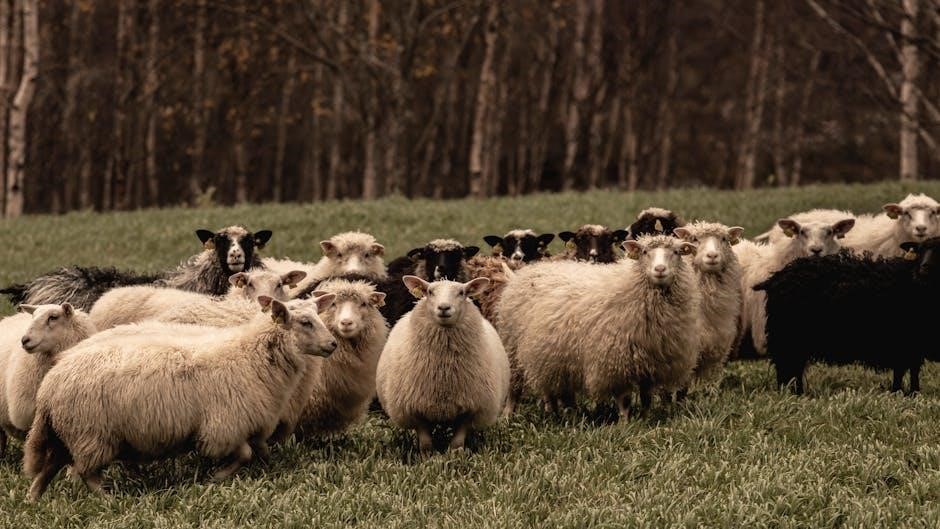
Evolutionary and Social Aspects of Herding
Herding likely evolved to enhance survival through cooperation and collective defense. However, this instinct carries social costs, potentially stifling innovation and leading to irrational group decisions driven by conformity-based imitation.
The Evolution of Cooperation and Herding
The intertwined evolution of cooperation and herding mentality presents a fascinating paradox. Initially, the capacity to follow the group likely conferred significant survival advantages to early humans and their ancestors. Mimicking successful behaviors – finding food sources, avoiding predators, or identifying safe shelter – increased individual chances of survival without requiring complex individual learning.
This inherent tendency towards imitation naturally fostered cooperation. When individuals consistently mirrored the actions of others, it created a cohesive social structure where collective efforts were more effective. The highest levels of cooperation, research suggests, are often achieved when herding mentality is also strong, indicating a synergistic relationship between these two fundamental aspects of social behavior.
However, this evolutionary pathway isn’t without its complexities. While beneficial in many contexts, the uncritical adoption of group norms can also lead to maladaptive behaviors. The drive to conform, while promoting group cohesion, can suppress individual innovation and critical thinking. Understanding this delicate balance – the benefits of cooperation versus the potential pitfalls of blind adherence – is crucial for comprehending the full scope of herding’s evolutionary legacy.
Social Costs Associated with Herding Mentality

Despite its evolutionary roots in promoting cooperation, herding mentality carries significant social costs. The suppression of individual critical thought, a core consequence of conformity-driven imitation, can hinder innovation and lead to poor collective decision-making. Groups susceptible to herding are prone to amplifying errors, as dissenting voices are often silenced or ignored in favor of maintaining group cohesion.
Furthermore, herding can exacerbate societal problems. In economic contexts, it fuels irrational market trends like speculative bubbles and subsequent crashes, causing widespread financial hardship. Socially, it can contribute to the spread of misinformation and the formation of echo chambers, reinforcing existing biases and hindering constructive dialogue.
The study of these social costs reveals a complex interplay between individual psychology and group dynamics. While the desire to belong is a fundamental human need, unchecked conformity can undermine rational thought and lead to detrimental outcomes. Recognizing these potential pitfalls is essential for fostering environments that value independent thinking and responsible decision-making, mitigating the negative consequences of herding behavior.

Conformity-Driven Imitation and Group Dynamics

At the heart of herd mentality lies conformity-driven imitation, a powerful force shaping group dynamics. Individuals often observe and replicate the behaviors of others, particularly within their social groups, seeking acceptance and avoiding social ostracism. This isn’t merely passive copying; it’s a complex process influenced by perceived social norms and the desire for belonging.
Research, such as Solomon Asch’s conformity experiments, vividly demonstrates this tendency. Participants readily yielded to group pressure, even when presented with demonstrably incorrect information. This highlights how strong the pull towards conformity can be, overriding individual judgment. Group size and perceived status within the group also play crucial roles, with larger and more influential groups exerting greater pressure.
Consequently, group dynamics can become self-reinforcing, as imitated behaviors become normalized and further encourage conformity. This creates a feedback loop, potentially leading to irrational or suboptimal outcomes. Understanding these dynamics is vital for recognizing and mitigating the risks associated with herd behavior in various social and economic contexts.